
- Record the session, skip the paperwork
- What full presence means for coaching quality
- How it works, step by step
- A CRM built for coaching
- The client profile as a coaching tool
- Tracking progress over time
- Coaching-specific AI
- Four specialized templates
- Why coaching-specific matters
- For teams and centers
- Organizational benefits
- Integration with the rest of BlaBlaNote
- The real change
We talk to a lot of coaches. Independent practitioners, executive coaches working with C-suite leaders, team coaches inside large organizations, coaching centers managing dozens of practitioners. The story is always the same: they love the sessions, they love the breakthroughs, they love watching clients grow. What they don’t love is the 30 minutes of documentation that follows every single session.
Writing up notes, tracking progress, creating action items, updating records. Necessary work for accountability and continuity, but it pulls energy away from the work that actually matters. For coaching organizations billing by the session, that documentation time is unbillable overhead. A coach who sees five clients a day and spends 30 minutes documenting each session loses 2.5 hours daily to paperwork. Over a month, that’s 50 hours. Over a year, it’s the equivalent of six full work weeks spent not coaching.
We built BlaBlaNote’s coaching features to give that time back.
Record the session, skip the paperwork
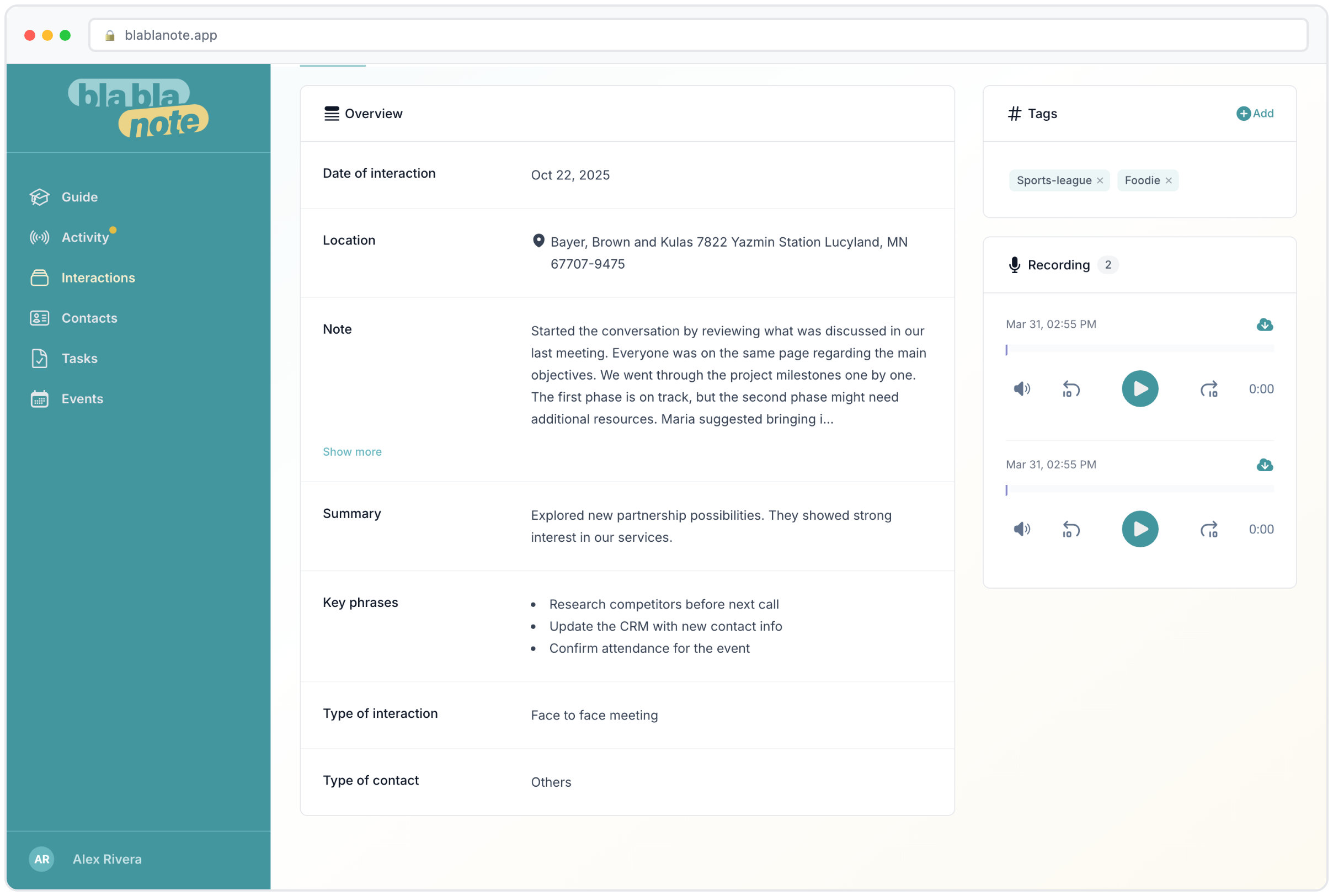
You press record at the start of the session and stop it at the end. BlaBlaNote transcribes everything and then goes further: it generates structured session notes with a summary, the key topics covered, and the action items that came up. Not a raw dump of text, but organized notes that look like something you’d write yourself, except you didn’t have to.
This means you can be fully present during the session. No scribbling, no splitting your attention between listening and note-taking. Your client gets 100% of your focus. The documentation takes care of itself.
What full presence means for coaching quality
Coaches know that presence is the foundation of effective coaching. When you’re half-listening because you’re trying to capture a key insight in your notebook, you miss the subtle cues: the shift in tone, the hesitation before an answer, the body language that tells you more than the words. These are the moments where coaching breakthroughs happen, and they require your full attention.
With BlaBlaNote recording and processing the conversation, you can give that attention freely. You can sit with a silence without worrying about losing the thread. You can follow an unexpected tangent without anxiously thinking about what you might forget. You can focus entirely on your client, because you know that everything important will be captured.
For coaches who see four or five clients a day, the difference is dramatic. Instead of ending the day drained from the combined effort of coaching and documenting, you end the day having only done the work you love. The documentation is already done.
How it works, step by step
- Start the session and hit record. The interface is minimal by design, so there’s nothing to distract you or your client.
- Coach normally. Forget the recording is there. Be present, listen, ask questions, guide the conversation.
- End the session and stop recording. The AI begins processing immediately.
- Review the output. Within minutes, you have structured session notes, a summary, key insights, and action items. Make any adjustments you want, or leave them as-is.
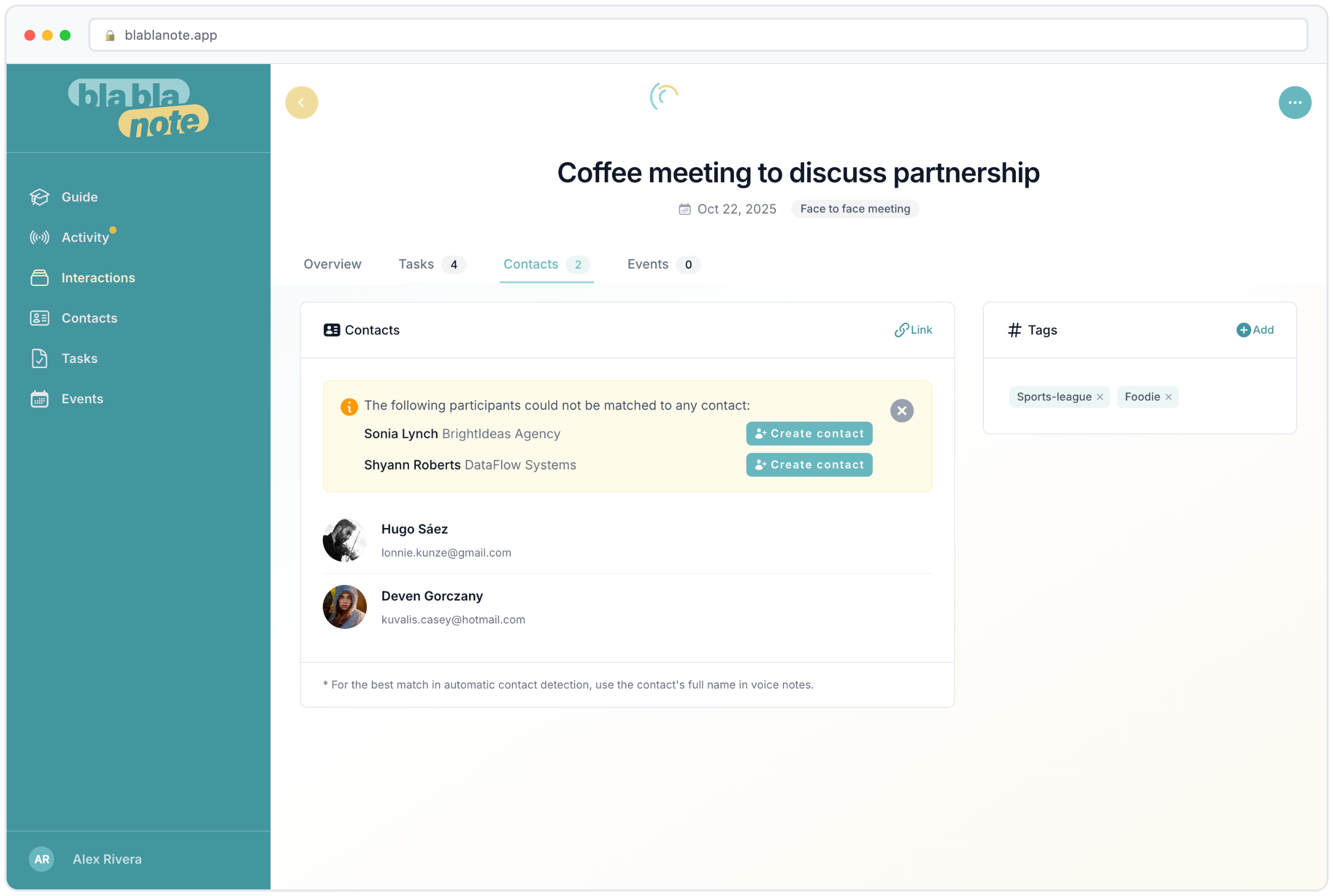
- The notes are automatically linked to the client’s profile, building a chronological record of your work together.
A CRM built for coaching
Each client in BlaBlaNote has their own profile. Open it and you see every session you’ve ever had with them, organized chronologically. Progress notes, action items from previous sessions, important dates like milestones or review checkpoints. When you’re preparing for an upcoming session, everything you need is in one place.
The client profile as a coaching tool
A good client profile isn’t just an administrative record. It’s a coaching tool. When you can scan the last three sessions before a call and see the progression of themes, the commitments your client made, and the areas where they’ve been stuck, you walk into the session with a strategic perspective that elevates your work.
Consider the difference:
Without BlaBlaNote: You’re trying to remember what happened last session. You recall the main topic, vaguely, but the specific commitments your client made are fuzzy. You spend the first 10 minutes of the session asking “so, how did it go with…?” and hoping your client fills in the blanks. The session starts slow and takes time to build momentum.
With BlaBlaNote: You glance at the previous session’s notes five minutes before the call. You see that your client committed to having a difficult conversation with their team lead, that they were nervous about it, and that you agreed to role-play the scenario at the start of this session. You open with “So, how did the conversation with Sarah go?” Your client is impressed that you remember the details. The session starts with momentum and depth from the first minute.
For coaches managing 15, 20, 30+ clients, this is the difference between feeling on top of your practice and feeling like you’re constantly catching up. Every client feels like they’re your only client, because you show up with full context every time.
Tracking progress over time
The chronological session history also makes it easy to track patterns and progress. You can see themes that keep coming up across sessions, commitments that keep getting delayed, and areas where your client has made significant growth. This longitudinal view is something coaches rarely have when they rely on handwritten notes or memory, and it makes your coaching more effective because you can identify patterns your client might not see themselves.
For coaching organizations, this progress tracking is also valuable for demonstrating ROI to corporate sponsors. When an HR department invests in executive coaching for their leaders, they want to see progress. BlaBlaNote’s structured session records make it straightforward to show the arc of a coaching engagement, the themes addressed, the milestones achieved, and the commitments fulfilled.
Coaching-specific AI
Generic AI summarization tools don’t understand coaching. They’ll give you a bullet-point summary of what was said, but they won’t structure it around the way coaches actually work. BlaBlaNote’s coaching templates are different.
Four specialized templates
Individual session notes capture client insights, emotional themes, agreed actions, and areas for follow-up. The structure mirrors how coaches naturally think about sessions: what came up, what shifted, what the client committed to, and what to explore next time.
Group session analysis tracks group dynamics, individual contributions, key takeaways, and collective action items. When you’re coaching a leadership team or running a group program, understanding the interplay between participants is as important as the content discussed.
Business interview breakdowns map collaboration opportunities, strengths and concerns, and next steps. For coaches who also do talent assessment or organizational consulting, this template structures the conversation around actionable business insights.
Project analysis evaluates scope, feasibility, risks, and probability of success. For coaches working with entrepreneurs or intrapreneurs on specific initiatives, this template helps structure the discussion around the practical dimensions of the project.
The AI adapts its output to the type of session you’re running. You select the template before or after recording, and the AI structures the notes accordingly. The same underlying conversation gets analyzed through the lens that matters most for your work.
Why coaching-specific matters
For HR departments deploying internal coaching programs, this means consistent documentation standards across all practitioners. Every coach produces session notes in the same format, making it easier to review, aggregate, and report. For coaching centers offering services to corporate clients, it means professional, structured reports that demonstrate value and track progress in a format stakeholders understand.
The difference between generic notes and coaching-specific notes is the difference between “discussed leadership challenges” and “client identified avoidance of conflict as a recurring pattern, committed to initiating feedback conversation with direct report by next session, and agreed to journal about the emotional triggers involved.” The second version is actionable, trackable, and useful for continuity. That’s what BlaBlaNote’s coaching AI produces.
For teams and centers
If you run a coaching center, BlaBlaNote keeps your practice organized. Each practitioner documents their sessions with the same structured templates, which means consistent quality across the team.
Organizational benefits
Consistent standards. Whether you have 3 coaches or 30, every session is documented with the same structure and depth. No more variation in quality depending on who’s better at note-taking.
Smooth client handoffs. When a practitioner goes on leave or a client needs to transition to a different coach, the full session history is in the system. The new coach can read through previous sessions and pick up where the last one left off, maintaining continuity for the client.
Practice-wide visibility. The center director can see engagement patterns across the practice without requiring coaches to fill out additional forms or reports. How many sessions per client, what themes are emerging, which engagements are approaching milestones.
Reduced administrative burden. Coaches spend their time coaching, not writing reports. This means more sessions per day, higher billable hours, and less burnout from administrative overhead.
For coaching organizations managing multiple practitioners, BlaBlaNote brings consistency without adding bureaucracy. The documentation happens as a natural byproduct of the session, not as an additional administrative step.
Integration with the rest of BlaBlaNote
The coaching features don’t exist in isolation. They integrate with everything else BlaBlaNote offers:
- Task management: Action items from coaching sessions flow into the task list, where you can track them across all your clients. When a client commits to an action during a session, it becomes a trackable task that shows up in your next session preparation.
- Calendar integration: Connect your Google Calendar or Outlook, and every upcoming coaching session includes a pre-meeting brief with the client’s profile, previous session notes, and open action items.
- Weekly planning email: Start every Monday knowing which clients you’re seeing this week, what open items need attention, and which relationships might need a check-in.
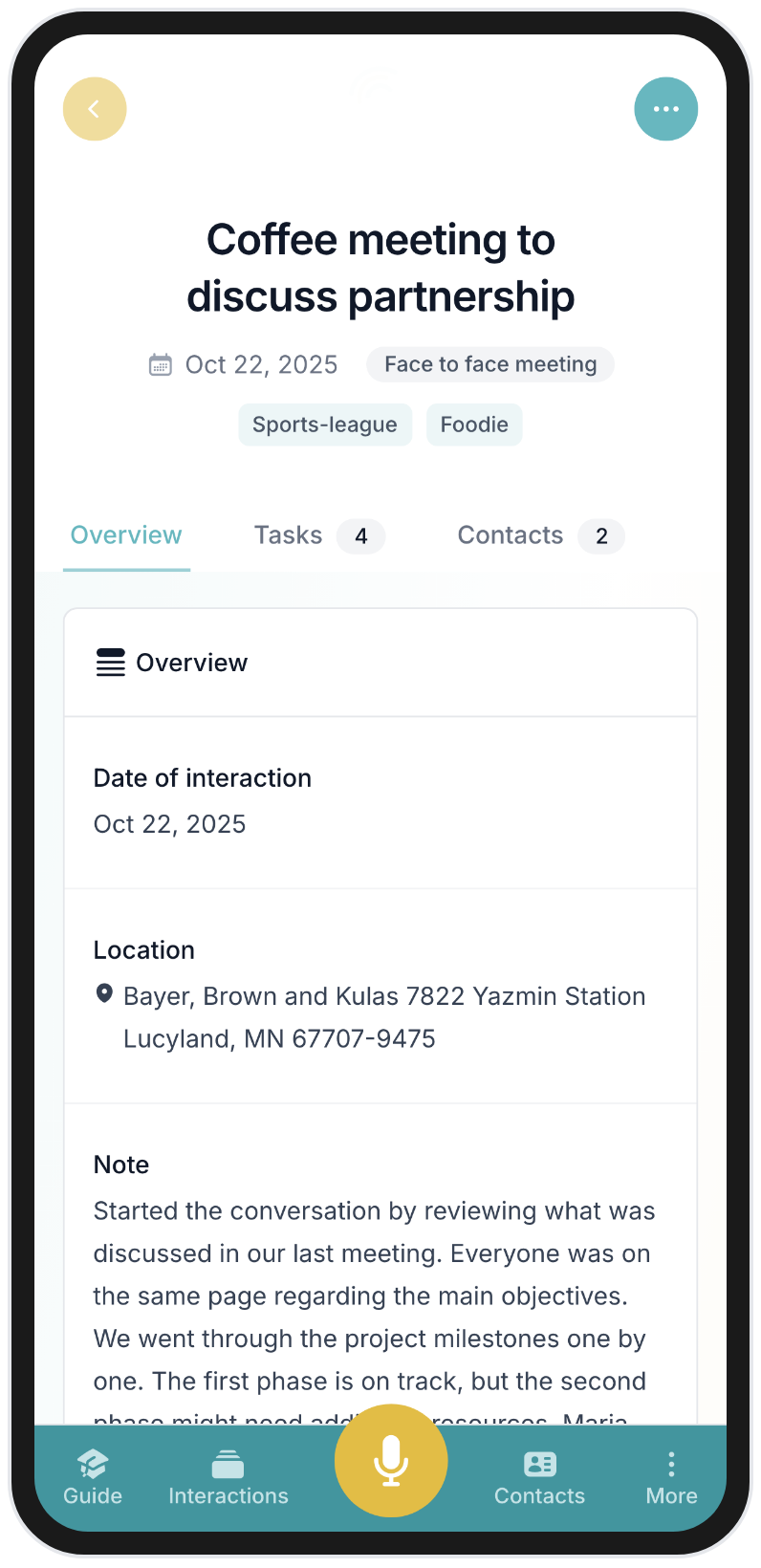
- Contact management: Each client’s profile builds over time into a comprehensive record of your coaching relationship. Important dates, like engagement start dates, milestone reviews, and birthdays, are tracked and surfaced when relevant.
The real change
Every minute you spend on documentation is a minute you’re not spending with clients or growing your practice. The math is simple: a coach who saves 2 hours of documentation per day gains 10 hours per week. That’s two additional client sessions per day, or time invested in business development, professional learning, or personal well-being.
We built these tools so coaches can do what they became coaches to do: help people. And for the organizations that employ them, it means more sessions per day, better documentation, and happier practitioners. The paperwork that used to be the least rewarding part of the job now happens in the background, automatically, while you focus on the work that actually changes lives.